
The 8 Fastest Growing Evergreen Trees
Evergreen trees are a smart, long-term investment in any landscape. They offer privacy, block wind, and stay green all year, even during frigid winters. If you're looking to build a screen, add some shade, or just want something that fills out fast, it helps to know which evergreens grow the quickest. Not every yard can wait decades for a tree to mature. These fast-growing evergreens can make a big difference in just a few short years.
Green Giant Arborvitae

This tree is a favorite for a reason. It's hardy, disease-resistant, and grows up to three feet per year once it’s established. It also handles a variety of soil types and doesn’t need much upkeep. People often use it for privacy hedges, since its thick foliage blocks views well. It's also less prone to deer damage than other arborvitae. Once planted, it just needs regular water and a bit of space to stretch out.
Leyland Cypress

Leyland cypress is another popular choice for fast privacy. It grows quickly and tall, forming a dense screen that stays full all year. It thrives in areas with mild winters and warm summers. Though it needs a bit of space, it responds well to trimming if you want a neater look, just be careful not to plant it too close to other trees or buildings. It prefers full sun and well-drained soil.
Eastern White Pine

With soft needles and long branches, Eastern white pine is one of the faster-growing native evergreens. It can shoot up more than two feet a year under good conditions. It doesn't love nearby dense pollution or heavy pruning, but in open, natural areas it does well. The tree’s shape can also change with time, from a tight pyramid to more open and wide-spread, so give it room. It’s great for natural borders or large rural yards.
Norway Spruce

Norway spruce can grow fast when young, sometimes over two feet per year. It starts with a tidy pyramid shape and becomes a wide, sweeping tree with graceful branches. It thrives in cold climates and adapts well to a range of soil types. It's commonly planted in windbreaks, especially in northern states, and it tends to resist pests better than other spruces. Once mature, it provides deep shade and excellent shelter for wildlife.
Nellie R. Stevens Holly

This tree grows quickly for a holly and offers thick, shiny leaves and bright red berries. It doubles as a privacy screen and triples as a wildlife magnet. Birds like the shelter, and the berries bring some nice color throughout winter. It handles drought fairly well and needs little pruning. Its shape tends to be naturally neat, but you can trim it into hedges or allow it to grow into a rounded, upright form.
Arizona Cypress
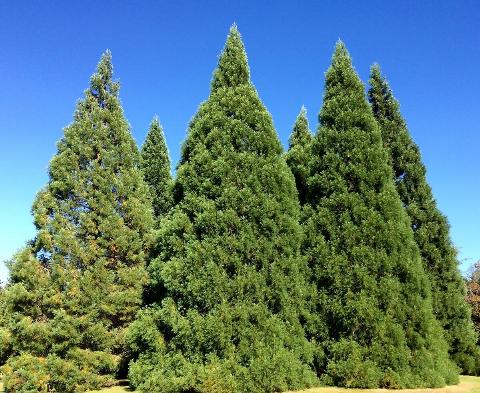
This evergreen is a good fit for dry, hot regions where many other trees struggle. It grows quickly and stands out with silvery-blue foliage. It doesn't need much water once it’s established and tolerates poor soils. It’s also naturally resistant to many pests. Because it grows fast and has a unique color, it works well as both a screen and a landscape accent. Just be sure to plant it in full sun.
Japanese Cedar (Cryptomeria)

Japanese cedar is often overlooked, but it grows steadily and has a soft, feathery texture that gives it a different look from other evergreens. It can gain up to two feet each year and prefers moist, well-drained soil. It's a good option for people who want something tall and elegant without the stiff look of more common privacy trees. It holds its color well through winter and tends to be low-maintenance once established.
Thuja 'Spring Grove'

A cousin of the Green Giant, this Thuja hybrid is also known for its fast growth and durability. It tolerates clay soil better than many evergreens and resists snow damage thanks to its strong limbs. Its dense, column-like shape makes it a great screen for narrow areas. It can add several feet per year with regular watering and enough sunlight. Like other arborvitae, it benefits from mulch and occasional feeding in early spring.
Fast-growing evergreens can transform a space in just a few years, giving you privacy, structure, and year-round greenery. Choosing the right one depends on your climate, space, and goals. Some are better for screens, others for open landscapes, but each of these trees have a blend of beauty and practicality that makes them worth the time and care they need at the start. With the right choice, you'll be looking at a full, green backdrop sooner than you think.