
Does Cold Temperatures Really Make Trees Explode?
Have you ever seen a tree along the road during winter that's split apart, splintered and fallen over, covered in a layer of ice? While it could have been the weight of the snow or some strong winds that did it in, there's also a chance the cold weather caused it to 'explode' in a sense. That's right, freezing temperatures can destroy trees from the inside out. How does this happen? Let's find out.
Freezing Sap

Trees aren't solid blocks of wood. They're filled with moisture and sap that travel through internal pipelines. When a deep freeze hits suddenly, the liquid inside the trunk turns to ice, and water expands when it freezes. If that expansion happens too fast for the wood to stretch, the internal pressure builds until the tree's outermost layers simply can't hold it back anymore.
Frost Cracks and Physical Stress

The technical term for this phenomenon is a frost crack. It usually happens when there's a massive temperature swing between a sunny day and a subzero night. The outer bark cools and shrinks rapidly while the inner wood stays slightly warmer. This creates an incredible amount of tension, so when the wood finally gives way, it splits with a violent force that releases energy in an often loud, echoing bang.
Species Most at Risk

Not every tree is prone to bursting this way. Hardwoods with dense structures, like oak, maple, and walnut, are the most common victims, as they have a specific vessel arrangements that traps moisture more effectively than others. Fruit trees are also quite vulnerable because they often have thinner bark that doesn't provide much insulation. If you own these varieties, they're the ones you'll want to monitor during a cold snap.
Survival and Self Repair
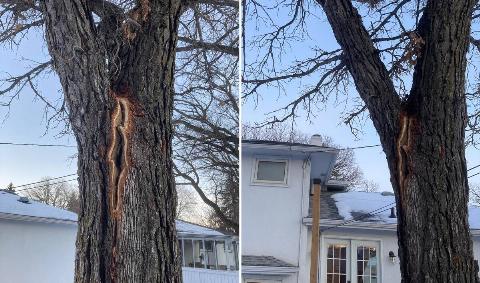
Believe it or not, an exploding tree isn't always a dead tree. After the initial split, if it's not big enough to cause the tree to collapse, the tree will try to heal itself by growing callus tissue over the wound during the spring. You'll often see a long, vertical scar on the trunk that looks like a raised seam. While the tree lives on, these cracks can become entry points for fungi or insects, so they do become weaker generally.
Protective Measures for Homeowners

You can't stop the weather, but you can help your trees survive it. Wrapping the trunks of young or thin barked trees with burlap or commercial tree wrap provides an extra layer of insulation. This helps regulate the temperature of the bark and prevents the rapid shrinking that leads to cracks. Keeping your trees well hydrated during the fall also ensures the wood is flexible enough to handle some internal pressure changes.
So if you hear a mysterious 'crack' or see a tree with a long scar, you might know what happened! Winter affects the flora of the world in more ways than we can ever see, but despite the sheer cold, they bounce back every year without fail. Some trees might not make it through, but the ones that do are stronger for it!