
Should You Be Feeding Birds All Year Long? Here’s What Expert Birders Think
Feeding birds is one of the simplest, yet still profound ways to connect with nature. Being able to watch birds, with all their beautiful colors and songs, right from your window never stops being a treat. However, there's often confusion about whether feeding birds all year is feasible, or even if it's good for them. The short answer is: yes, you can feed them all year, but with a few important considerations. Feeding birds responsibly means more than just keeping a feeder full. It’s about knowing what birds need, how the seasons affect them, and how to feed them in a way that helps.
The Case for Feeding Year-Round

Feeding birds year-round can be helpful, especially in areas where natural food is limited due to development or seasonal changes. Backyard or other types of home feeders support birds during breeding, migration, and harsh weather. They also allow people to observe wildlife up close, which helps build awareness and appreciation for your local ecosystems, especially in kids. Your success in feeding depends on what you feed, how you feed, and how clean your setup is. Year-round feeding works best when it's done thoughtfully, with seasonal adjustments.
When Not to Feed Birds

There are times when feeding birds can do more harm than good, though. Dirty feeders and spoiled food can spread disease fast, especially in warmer months. Feeders can also attract pests or larger wildlife like squirrels, raccoons, or even bears, depending on where you live. Overcrowding around feeders can also cause competitive stress, so it's good to have an array of feeders for birds to choose from. If you're not able to keep feeders clean and maintained, it’s better to take them down. Responsible feeding always puts the birds’ health first.
What to Feel Birds in Spring

Now, as mentioned, birds' feeding needs can vary from season to season. In spring, many birds are returning from migration or starting to nest. Food is becoming more available, but birds still benefit from extra protein and fat. Put out mealworms, suet, and sunflower seeds to support nesting and feeding chicks. Keep an eye on the food freshness as temperatures rise and clean feeders often to prevent illness. Spring feeding can help birds get the energy they need to raise the next generation.
In Summer
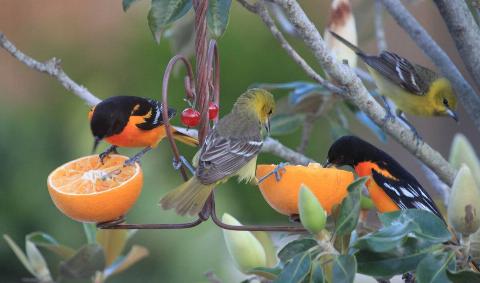
Summer is when nature provides the most. Bugs, berries, seeds, and nectar are easy to find. Most birds don't rely on feeders now, but there are still benefits to offering light snacks. Use fruit slices, nyjer seed for finches, and nectar for hummingbirds. Avoid suet unless it’s made specifically to withstand heat. More important than food is water. A clean, shallow dish or birdbath can be a lifesaver during stretches of high heat or drought.
In Fall

Fall is a busy time for birds. Many are preparing to migrate, while others are already gearing up for winter. This is when they need calorie-rich food to build energy reserves. Black oil sunflower seeds, peanuts, and suet are ideal. Keep feeders full and clean, and consider planting native trees or shrubs that produce berries if you can. Fall feeding helps birds through a demanding season of travel, and you might seen less common species as they migrate over your area!
In Winter

Winter is the hardest season for many birds. Natural food is scarce, and temperatures drop pretty severely. While many species have already gone south, there are some that stick around or only appear during winter. Continuing to keep food out during the cold season helps these birds survive. Offer high-fat, high-calorie foods like suet, peanuts, sunflower seeds, and millet. Place feeders in sheltered areas, and keep them clean and stocked. Don't forget water, since fresh, unfrozen sources can be hard to find. Winter feeding is often the most important support you can offer.
You don't have to feed birds every season, but if you do, make it count. Keep feeders clean. Offer the right foods at the right times. Pay attention to local bird species and adjust your feeding based on what they need most. Even small efforts, when done carefully, can have a positive impact. Whether you feed birds year-round or only in certain seasons, thoughtful care is what makes the difference.