
9 Hidden Features On Planes You Never Would Have Noticed
Flying may feel routine, especially if you've done it a few times, but airplanes are full of little details most passengers never even notice. Some are there to keep you safe, others make the crew's job easier, and a few are just clever design features you might not expect. Once you know what to look for, it’s hard not to see them. Here are nine features on planes you probably didn’t realize were even there.
The Black Triangle Above the Window

If you've ever seen a small black triangle above a window, it marks the spot where the wings are most visible from the cabin. Flight attendants use these markers to inspect the wings for ice or damage. It's a simple visual cue with a big role in safety. For passengers, it also happens to be one of the best spots to get a clear view of the wing and engine during takeoff and landing.
The Hole in the Airplane Window

That tiny hole at the bottom of your window is actually doing important work. It balances air pressure between the inner and outer panes and prevents fogging by allowing moisture to escape. It's called a "bleed hole" and it helps the window stay strong under pressure. You're not imagining things if you've seen frost gather around it either, that's just part of the system doing its job mid-flight.
The Built-In Handrails by the Overhead Bins

Most people reach up and grab the bins when they walk down the aisle, but there's a proper place to hold: the small handrails along the underside. These are meant to help passengers and crew keep their balance during turbulence or boarding. They're easy to overlook but offer more grip than a slippery bin door. Holding onto these instead of the bins helps avoid opening or shifting someone else's luggage.
The Secret Latch on the Lavatory Door
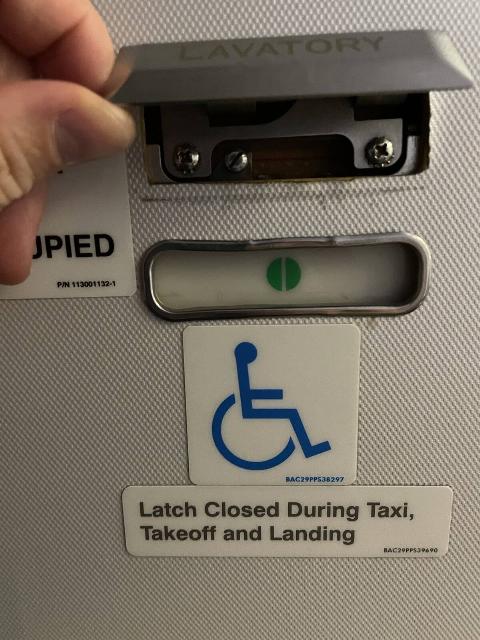
That "locked" bathroom door? It's not truly locked. Every airplane lavatory has a hidden latch under the "Lavatory" sign that allows the crew to open it from the outside in an emergency. This helps flight attendants assist someone who's unwell or has been in there too long. It’s a safety feature, not an invasion of privacy, and it's a reminder that flight crews are trained to respond fast when something isn’t right.
The Hook on the Wing

If you look out the window near the wing, you might notice a small yellow hook or spot for a latch sticking out. It's not decorative, that's part of the emergency evacuation system. In case the emergency slides aren't usable, ropes attach to these hooks to help guide passengers safely across the wing during an evacuation. It’s a feature made with worst-case scenarios in mind, tucked in plain sight.
The Overhead Panel Sensors

Next time you adjust the air vent or reading light above your seat, notice the tiny black dot near the buttons. That's an infrared sensor. It lets the crew control individual lights and helps keep track of which seats are occupied. Some planes even use these sensors for temperature zoning. While it may seem like just another button panel, it’s a small tech upgrade that improves the flight without anyone noticing
The Crew Rest Compartment

On long flights, crew members need rest too. On many large aircraft, there's a hidden compartment above or below the main cabin where flight attendants and pilots sleep. These areas are usually accessed through what looks like a locked cabinet or stairway. You’d never know they were there unless someone told you. It’s an important part of keeping crews alert and well-rested on longer trips, even if it’s out of sight.
The Tiny Button on the Armrest

There's often a small, hard-to-spot button under the armrest closest to the aisle. Pressing it allows you to lift the armrest up and out of the way. This is especially helpful for passengers with reduced mobility or those trying to exit a row more comfortably. It's one of those features rarely pointed out, but it can make getting up a lot less awkward, especially during a tight or crowded flight.
Dim Cabin Lights Before Landing

Cabin lights are often dimmed before takeoff and landing, and it's not just about ambiance. It’s a safety measure that prepares passengers’ eyes in case of an emergency evacuation. By adjusting to lower light levels, your eyes are better prepared if you suddenly need to move quickly in the dark. It’s a precaution that seems minor but could make a real difference in a time-sensitive situation.
Airplanes are full of thoughtful details designed with safety, comfort, and efficiency in mind. Most of these features go unnoticed unless you know what they're for, but each one serves a purpose. Next time you fly, keep an eye out for them. Understanding how planes are built to protect and assist everyone on board makes flying feel a little less mysterious — and a bit more impressive.