
These Animals Were The Last Of Their Species
Extinction isn't always a loud event. Sometimes, it ends with a single creature living out its days in a zoo, forest, or lab, carrying the final thread of an ancient bloodline. These last individuals symbolize more than just the end of a species. They reflect how far things have gone, and how far we still have to go. The following stories are reminders that extinction isn't always history. It's also recent. It's also human.
Lonesome George

George was the last Pinta Island tortoise. He was discovered in 1971, long after people assumed his kind had disappeared. Despite decades of breeding attempts, no offspring ever came. When he died in 2012, his subspecies ended with him. Conservationists called him a symbol of hope, but he also became a clear warning. Even with all our tools and care, sometimes we can't undo the damage already done.
Martha, the Passenger Pigeon

Once numbering in the billions, passenger pigeons darkened North American skies for hours during migration. But people hunted them, destroyed their nesting grounds, and pushed them into extinction in a matter of decades. Martha, the very last one, died in captivity in 1914. Her death marked the loss of not just a bird, but a natural phenomenon. Entire skies once filled with wings were left empty. Her life became a lesson in how fast abundance can vanish.
Booming Ben, the Heath Hen

Booming Ben was the last heath hen, a once-common bird that filled the American northeast. Habitat loss and hunting wiped out his flock, and by 1929, Ben was all that remained. He would call out for mates that no longer existed, waiting in vain each season. His final calls echoed across Martha's Vineyard until he too disappeared. His loneliness became a quiet record of extinction, one that no one could reverse.
Toughie, the Rabbs' Fringe-limbed Tree Frog
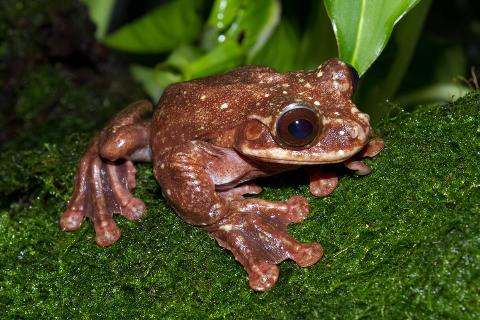
Toughie was found in Panama in 2005 during a rescue effort. His species was already collapsing due to habitat loss and a deadly fungal disease spreading rapidly through amphibian populations. He lived the rest of his life in a terrarium, the only known member of his kind. When he died in 2016, it wasn't just a frog that disappeared. It was a living connection to an ecosystem unraveling faster than we can track.
The Po'ouli Trio

The Po'ouli, also known as the Black-Faced Honeycreeper, a small Hawaiian bird, was only discovered in 1973. Within thirty years, just three were left. Conservationists attempted to bring them together for breeding, but they were too old, and none survived long after. One of them died in 2004 in captivity. These birds, isolated in the shrinking forests of Maui, are now gone. Their short time in the scientific record shows how even newly discovered species can vanish almost as quickly as they're found.
These animals weren't just names in a textbook. They had personalities, routines, even favorite foods. They were the last to carry their species' weight, often alone, while the world moved on. Their stories aren’t just sad. They’re deeply useful. They show how fragile nature can be, and how much our choices matter. Extinction isn’t always ancient history. Sometimes it’s within a lifetime. Sometimes it’s preventable. And sometimes, it happens when no one is paying attention.